 Get in touch





Key data at a glance
About the company
ECM® Espresso Coffee Machines and Profitec
Sales and manufacturing of special machines for coffee
3 production and logistics sites
approximately 100 employees
SAP Business One (Cloud)
Modula warehouse racking system, DHL, UPS, Microsoft 365
 Apps in use
 Apps in use
Thanks to years of industry experience, we offer comprehensive SAP extensions in the form of add-ons to maximize the functionality of your new ERP system. This particular customer used, among other things:

Initial situation
ECM and Profitec They are legally separate companies, but they access a shared supply chain and manufacture at multiple locations. This very situation led to unnecessary complexity and high manual effort in the existing ERP system.
Acute challenges before project start
- Manual internal sales and delivery processes between the two companies
- Documentation via paper trails, media breaks between production, logistics and administration
- Separate system environments without a unified database
- No structured warehouse management and unreliable inventory data
- Lack of serial number traceability
- High training requirements when switching from a long-standing legacy system
Problem description from customer perspective
„"Profitec and ECM are two separate companies that access a common supply chain. In the existing ERP system, this has led to many complications and manual processes."“
Project progress
Project progress
common goals, analysis of the system landscape, project organization
Current state assessment, target processes, fit/gap analysis
Basic configuration, customization, interfaces to third-party systems
Data cleansing and migration, process testing, user training
Go-live support, optimization, ongoing support
Both companies have been working productively with SAP Business One since January 2025.
Video about SAP integration with conesprit
You are currently viewing a placeholder content from YouTube. To access the actual content, click the button below. Please note that doing so will share data with third-party providers.
Solution & Conclusion
SAP Business One was introduced as a central platform and, where the standard was insufficient, extended with conesprit Apps – in four building blocks:
Automated EDI process between ECM and Profitec
When ECM creates a customer order, a purchase order is automatically generated, transmitted to Profitec via EDI, and created there as a customer order, visible in the fulfillment terminal within seconds. Orders can only be created if sufficient stock is available. Picking begins at the fulfillment terminal with a direct connection to the Modula warehouse racking system; delivery note, outgoing invoice, and DHL/UPS label are generated at the touch of a button. Profitec delivers directly to ECM's end customer; all subsequent documents are generated automatically.
Paperless production with the Manufacturing App
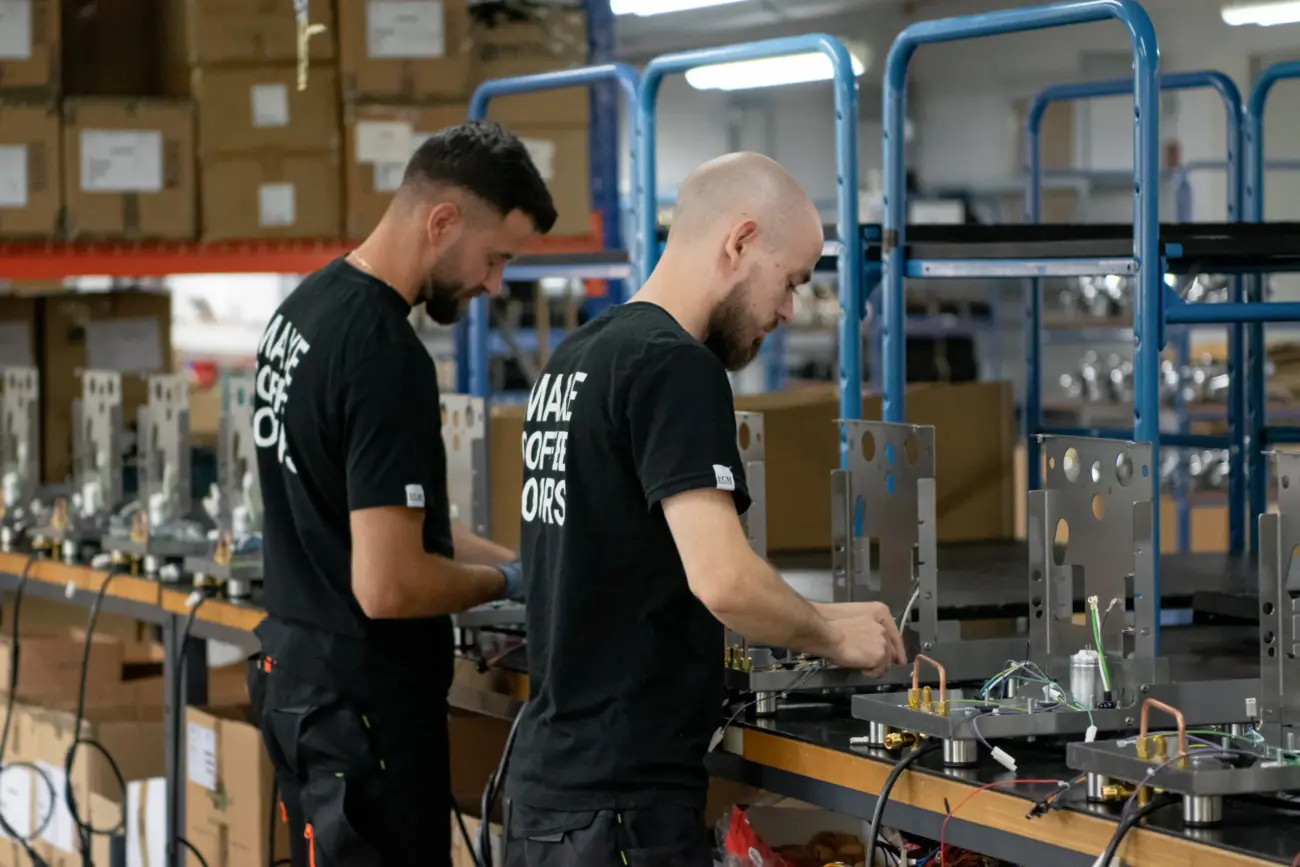
Production requirements are derived from orders and sales forecasts, production orders are created via the planning assistant and released according to availability. Employees view work steps and components on tablets and terminals; serial numbers are captured by scanning and pallets are labeled with package tags.
WMS-supported warehouse processes
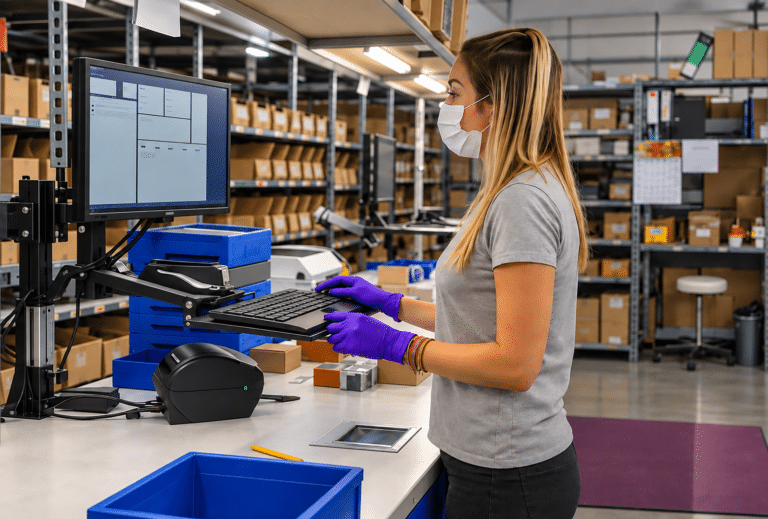
Goods receipt, stock transfers, and order picking are all handled seamlessly using scanners and tablets. If the stock level in the shipping warehouse drops, the WMS app automatically generates replenishment orders and stock transfer suggestions – including clear instructions on which pallet needs to be moved where.
Transparency for sales and administration
Individual sales, revenue and margin reports, backorder lists, ABC customer analyses and an integrated, audit-proof document management system with direct SharePoint integration based on the existing Microsoft 365 infrastructure.
The result in comparison
Previously
- No car inventory reservation
- High coordination effort
- Manual serial number entry
- System breaks between the areas
- Paperwork chaos in the warehouse
- 2 full-time employees for order processing
Afterward
- Closed digital sales processes
- Significantly less communication effort
- Serial number tracking via scan in real time
- Seamless system without media breaks
- Tablets and scanners in warehouse and production
- A part-time employee
Customer voice

„"For me, SAP Business One and conesprit stand for flexibility, process understanding and reliability."“
Do you want to read the full use case?
Download the UseCase as a free PDF now.
The complete information for this use case is just a click away. Enter your email address and click Download: The full use case will open automatically in your browser.